

Protect and Teach CIC | Parliamentary Inquiry
Deadline for written evidence: Monday 26 October 2026, 11:59 pm
The House of Lords Public Services Committee is inviting written evidence for its inquiry into children’s social care in England. The inquiry examines financial pressures, residential placements, fostering, kinship care, workforce challenges, unregistered children’s homes and the effectiveness of regulation.
For children and families involved with social care, these are not simply questions of budgets, commissioning or administration. They concern the availability, suitability and safety of the support children receive, and what happens when that support is delayed, unsuitable or unavailable.
To submit: https://committees.parliament.uk/submission/3982/#/evidence/3982/call-for-evidence
There is a start submission button https://committees.parliament.uk/submission/3982/#/evidence/3982/what-happens-to-evidence
You just click through to add your submission.
Protect and Teach CIC encourages parents, carers, care-experienced adults, safeguarding professionals, social workers, educators and others with relevant knowledge to examine the inquiry and consider submitting their own evidence.
What do the figures tell us?
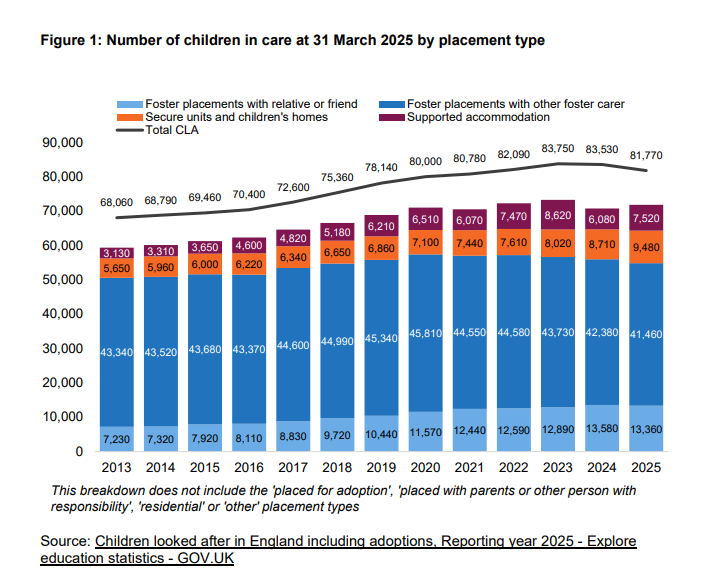
Official statistics reveal a complex picture. According to the Department for Education:
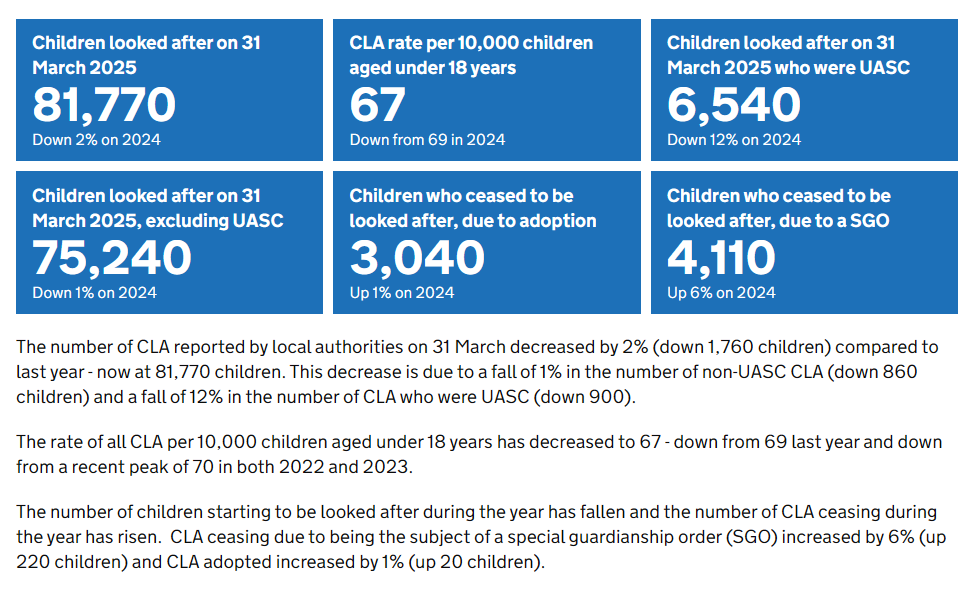
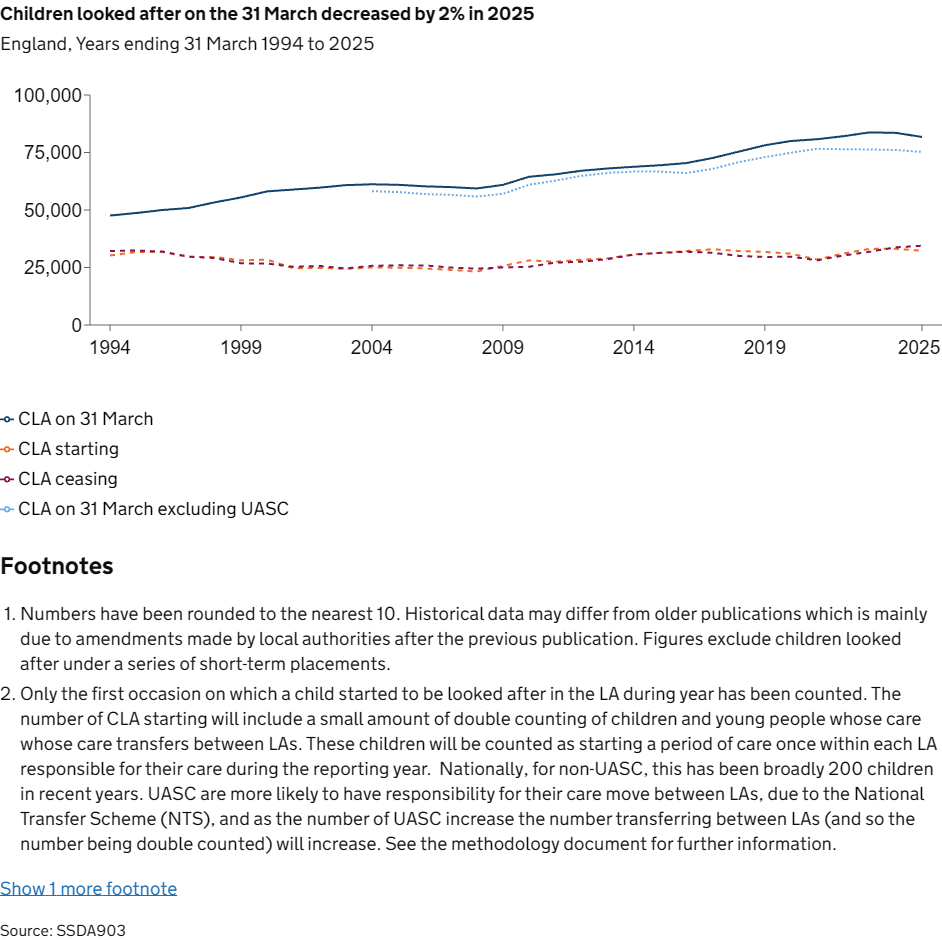
- 81,770 children were looked after by local authorities in England on 31 March 2025, a decrease of 2% from the previous year.
- 230,590 Section 47 child protection enquiries were undertaken during the year ending March 2025, an increase of 2.7% from the previous year.
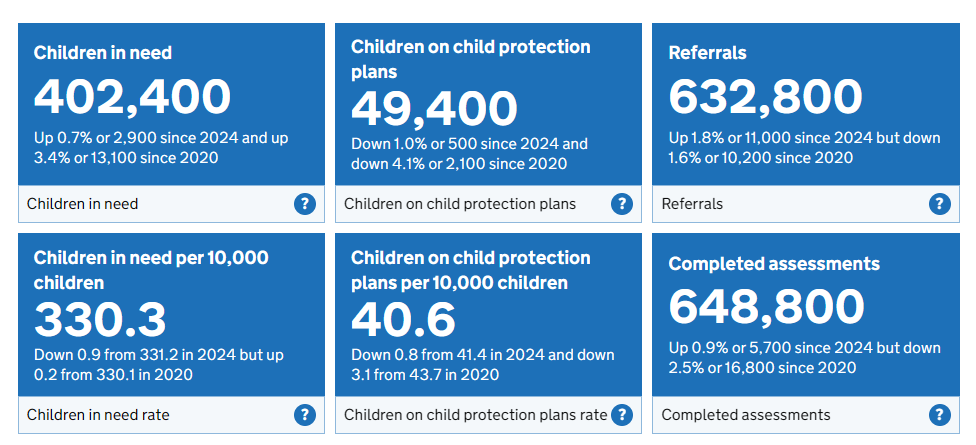
These figures measure different aspects of children’s social care. A reduction in the number of children looked after does not necessarily mean that safeguarding concerns, demand for family support or placement pressures are changing in the same direction.
The Committee will need to consider not only how many children require services, but what kinds of support they need, when they receive it and whether that support is effective.
Understanding the figures: A child who is looked after by a local authority is not necessarily subject to a care order. Looked-after status can also arise through accommodation provided under the Children Act 1989. This is an important distinction when interpreting the statistics on children in care.
* “Under the Children Act 1989, a child is looked-after by a local authority if he or she falls into one of the following: is provided with accommodation, for a continuous period of more than 24 hours [Children Act 1989, Section 20 and 21], is subject to a care order [Children Act 1989, Part IV], or is subject to a placement order”
Sources:
- Department for Education — Children looked after in England, 2025
- Department for Education — Children in need, 2025
What is Parliament asking about?
The Committee has published 15 questions covering:
- Changes in demand and rising local authority expenditure.
- Residential children’s homes, placement availability and commissioning.
- Fostering, foster-carer shortages and kinship support.
- The Government’s plans to expand fostering provision.
- Workforce pressures and their impact on children.
- The continuing use of unregistered children’s homes.
- Ofsted’s inspection, registration and regulatory responsibilities.
- Factors influencing outcomes for care-experienced children.
The questions are intended to guide submissions. Contributors do not have to answer all 15. Evidence focused on one or two areas of genuine knowledge or experience can still be valuable.
What about safeguarding and early intervention?
Although the Committee’s questions concentrate substantially on the care system and its provision, they do not explicitly ask about several closely related matters: early help, child protection thresholds, family support or the family courts.
That does not mean these subjects are excluded. The inquiry’s overview refers to addressing problems early and intervening decisively where harm is likely.
These wider issues may be relevant when considering changing demand, expenditure, workforce pressures and children’s eventual outcomes.
For example, contributors may wish to investigate whether children and families receive appropriate support before problems escalate, how services communicate safeguarding concerns, and whether children with disabilities or special educational needs receive timely and suitable assistance.
Other relevant considerations include placement stability, educational continuity, children’s wishes and feelings, effective professional supervision, and whether safeguarding concerns can be raised and investigated appropriately.
These are areas for investigation, not predetermined conclusions. Evidence should distinguish between documented findings, professional observations, personal experience and matters requiring further examination.
Where can you begin your research?
Protect and Teach recommends consulting primary sources wherever possible.
Parliamentary inquiry
Official statistics and policy
- Department for Education — Children looked after in England, 2025*
- Department for Education — Children in need, 2025
- Ofsted — Children’s social care statistics and publications
- Department for Education — Renewing Fostering: homes for 10,000 more children
Protect and Teach has also prepared a supporting research guide bringing together the Committee’s 15 questions, suggested areas of investigation and links to further reading.
The Supporting research guide is at the end of this article Jump straight to the Supporting Research Guide – including six research themes, all 15 parliamentary questions, official reading materials and submission guidance.
Important rules for submitting evidence
Anyone considering a submission should read Parliament’s guidance carefully.
1. Your evidence must be original and prepared for this inquiry.
The Committee cannot accept evidence that has already been published elsewhere, including in blog posts, newspaper articles, journals or on social media.
Previously published research, policies and statistics may be referred to as supporting evidence, provided they are properly referenced.
2. Do not publish your submission before Parliament gives permission.
Once evidence has been submitted, contributors must not publish or circulate their submission publicly until the Committee has confirmed that it has accepted and published the evidence, expressly permitted publication, or rejected it.
This includes sharing the completed submission on a website, blog or social media.
3. Be aware that publication may be permanent.
If the Committee accepts a submission, the evidence becomes the Committee’s property. It may be published online and quoted in its report.
Published evidence can remain publicly accessible indefinitely. Contributors should therefore consider carefully what information they include.
4. Protect personal information.
- Names of contributors or organisations will usually be published.
- Requests for anonymous or confidential evidence may be considered in exceptional circumstances, but the Committee makes the final decision.
- Avoid including unnecessary identifying information about children or other individuals.
- Contact details requested by Parliament should be entered in the designated submission fields rather than included unnecessarily within the evidence document itself.
- The Committee examines public policy rather than investigating individual complaints. It will not normally consider evidence concerning ongoing court proceedings or cases under appeal.
5. Declare substantial AI-generated content.
For House of Lords committee submissions, contributors must declare at the beginning of their evidence if a substantial part was generated using artificial intelligence.
Contributors remain responsible for checking the accuracy of everything submitted, regardless of whether they received assistance in preparing it.
6. Follow the document requirements.
Written evidence should:
- Be concise and respond to the inquiry.
- Use numbered paragraphs.
- Include a brief summary if longer than 3,000 words.
- Be submitted as a single Word, ODT or RTF document.
- Be smaller than 25 MB.
- Contain no decorative images, logos or repeating headers and footers.
These requirements relate to the document uploaded to Parliament, not to the design of an accompanying public information article.
How to submit evidence
Closing date: Monday 26 October 2026 at 11:59 pm. Late submissions cannot be accepted.
Evidence can be submitted by individuals, groups of individuals, organisations or groups of organisations.
SUBMIT EVIDENCE TO THE HOUSE OF LORDS COMMITTEE
To submit: https://committees.parliament.uk/submission/3982/#/evidence/3982/call-for-evidence
There is a start submission button https://committees.parliament.uk/submission/3982/#/evidence/3982/what-happens-to-evidence
You just click through to add your submission.
For questions about the inquiry or the submission process, contact the Committee at hlpublicservices@parliament.uk.
A final word from Protect and Teach
Protect and Teach CIC is preparing its own original evidence for this inquiry.
This article provides general information and research sources. It is not Protect and Teach CIC’s formal evidence submission, which is being prepared separately for the Committee.
We encourage contributors to undertake independent research, draw their own conclusions and submit evidence reflecting their own knowledge, professional expertise or lived experience.
The purpose is not to generate identical responses, but to help Parliament receive informed, relevant and original evidence about children’s social care.
Children’s safety, welfare and long-term outcomes must remain central to that examination.
Children’s Social Care Under Scrutiny
What the House of Lords is asking, why it matters, and how to research and submit your own evidence.
This is a research and participation resource, not a model submission. Protect and Teach is preparing its own separate evidence. Use the official questions and sources below to form your own accurate response. You do not have to answer all 15 questions or agree with Protect and Teach.
Six areas worth investigating
Before care is needed
How are family help, assessment, child protection and support for disabled children reflected in the trends? The inquiry overview recognises both early help and decisive intervention to prevent harm.
Safe and suitable homes
What is the difference between available capacity and a placement which meets an individual child’s assessed needs? What changes when a child lives far from family or school?
Fostering and kinship
Are carers receiving the financial, practical and professional help needed for stable relationships? How will the 10,000 additional fostering places be evaluated?
People and accountability
How do workloads, supervision, records and information sharing affect children? Who takes responsibility when safeguarding risks cross organisational boundaries?
Unregistered provision
Why are placements being made in settings without required registration? What happens to the child during investigations and enforcement?
What good outcomes mean
How should Parliament measure safety, education, health, relationships, stability, children’s voices and transitions into adulthood?
- DfE recorded 81,770 children looked after in England at 31 March 2025 — down 2% from 2024.
- DfE recorded 230,590 section 47 enquiries in the year ending March 2025 — up from 2024.
- Ofsted opened 850 cases concerning potentially unregistered children’s homes and supported accommodation in 2025–26; 710 cases were assessed as requiring registration. These are cases, not necessarily unique children or providers.
These indicators measure different things. Read the methodology and avoid treating them as interchangeable.
The committee’s 15 questions — with research prompts
Below is the question set supplied from Parliament’s call for evidence. Question 14 retains the duplicate “(b)” labelling found in the published wording. Research prompts are written by Protect and Teach and are not suggested answers.
How has demand for children’s social care changed in recent years? How is it expected to change going forwards?
Explore: Examine referrals, assessments, child-protection enquiries, looked-after children and unmet need separately. Compare local and national trends; do not assume that more referrals always mean more children in care.
What are the key drivers of rising local authority spending on children’s social care?
Explore: Explore placement prices, specialist needs, commissioning, workforce, inflation, early support, preventative services and the difference between costs and outcomes.
To what extent is the supply of residential placements meeting the needs of, and delivering good outcomes for, care-experienced children?
Explore: Ask whether placements meet assessed need, provide safe and stable care, and maintain suitable schooling, healthcare and family contact.
What are the barriers to getting more suitable residential placements in the areas where they’re needed?
Explore: Consider geographical shortages, suitable buildings, registration, specialist staffing, children with disabilities and complex needs, and planning constraints.
What are the strengths and limitations of regional commissioning of residential care placements?
Explore: Explore pooled purchasing and shared expertise alongside the risk of losing local accountability, placing children far from home or standardising away individual needs.
What impact will the market management measures in the Children’s Wellbeing and Schools Act have on the children’s social care market?
Explore: Compare the enacted Act, explanatory materials, commencement arrangements and proposed implementation. Ask how financial oversight and market measures could alter capacity and quality; distinguish predictions from proven effects.
To what extent is the foster care system meeting the needs of, and delivering good outcomes for, care-experienced children?
Explore: Consider matching, placement stability, support for carers, the child’s voice, relationships with siblings, allegations processes and transitions.
What are the key factors contributing to shortages of foster carers?
Explore: Explore approval procedures, allowances, practical support, employment constraints, retention and recruitment; distinguish national statistics from personal experience.
How effectively are kinship carers being supported?
Explore: Compare informal and formal kinship arrangements; investigate allowances, assessment, legal advice, respite, access to SEND support and the 2026 statutory guidance.
What will be the impact of the “Renewing Fostering: homes for 10,000 more children” strategy?
Explore: Examine the strategy’s assumptions and delivery plan. Ask how additional capacity, suitability, stability, carer retention and children’s own experiences will be measured.
What are the key challenges facing the children’s social care workforce? What impacts are these challenges having on care-experienced children?
Explore: Consider recruitment, vacancies, workloads, supervision, continuity of social worker, safeguarding competence, professional challenge and multidisciplinary information sharing.
What are the key factors contributing to the continued use of unregistered children’s homes? What risks do these settings potentially present to care-experienced children?
Explore: Ask why commissioners use unregistered settings, what suitable alternatives exist, and what risks arise where oversight and registration requirements are unmet.
How effectively are system partners, including local authorities, private providers, Ofsted and the Department for Education, responding to the continued use of unregistered children’s homes? What should they be doing differently?
Explore: Explore who records concerns, who investigates, how commissioning authorities respond, what enforcement achieves and how children are protected while alternative places are found.
How effectively is Ofsted regulating and inspecting the children’s social care sector, particularly in relation to (a) tackling the use of unregistered settings, (b) registering new children’s homes and (b) collecting and publishing data on the sector? How will this change with Ofsted’s new proposals?
Explore: Examine inspection intervals, registration timeliness, enforcement outcomes, published data limitations and planned proposals; distinguish regulator powers from local authority commissioning duties.
What factors have the greatest impact on outcomes for care-experienced children?
Explore: Explore safety, meaningful relationships, health, education, disability and SEND support, placement stability, advocacy, housing, employment and transitions to adulthood.
Official reading library
Start with primary sources. Check dates, geographical coverage and whether a policy is law, guidance, a proposal or an evaluation.
Before you submit: important parliamentary rules
- Write original evidence specifically for this inquiry. Do not submit text already published in blogs, on websites or on X. You may cite existing published sources with references.
- Do not publish your submission yourself until the committee has accepted and published it, given you permission to publish, or rejected it.
- Identify yourself appropriately. Names and organisations are usually published. You may request anonymous or confidential treatment in exceptional circumstances; the committee decides.
- Protect privacy. Do not include identifying details about children or others that should not enter the permanent public record. Avoid live court cases and defamatory allegations.
- If substantial portions were generated by AI, House of Lords committees ask for a declaration at the start. You remain responsible for checking accuracy.
- Format: numbered paragraphs, concise and responsive. Over 3,000 words requires a brief summary. Upload one Word, ODT or RTF document under 25MB; no decorative images/logos or repeating headers/footers.
- Individual cases: focus on lessons for public policy. A committee cannot resolve an individual complaint.
Practical approach: Choose only questions you can address; distinguish first-hand experience from inference; give dates and sources where appropriate; explain the effect on children and what change or further inquiry is warranted. Remove identifiable or confidential material before upload.
Applies to the House of Lords Public Services Committee inquiry into children’s social care in England. Deadline: 26 October 2026 at 23:59. For clarification of parliamentary procedure contact hlpublicservices@parliament.uk. This public research guide is distinct from any unpublished Protect and Teach organisational evidence.