
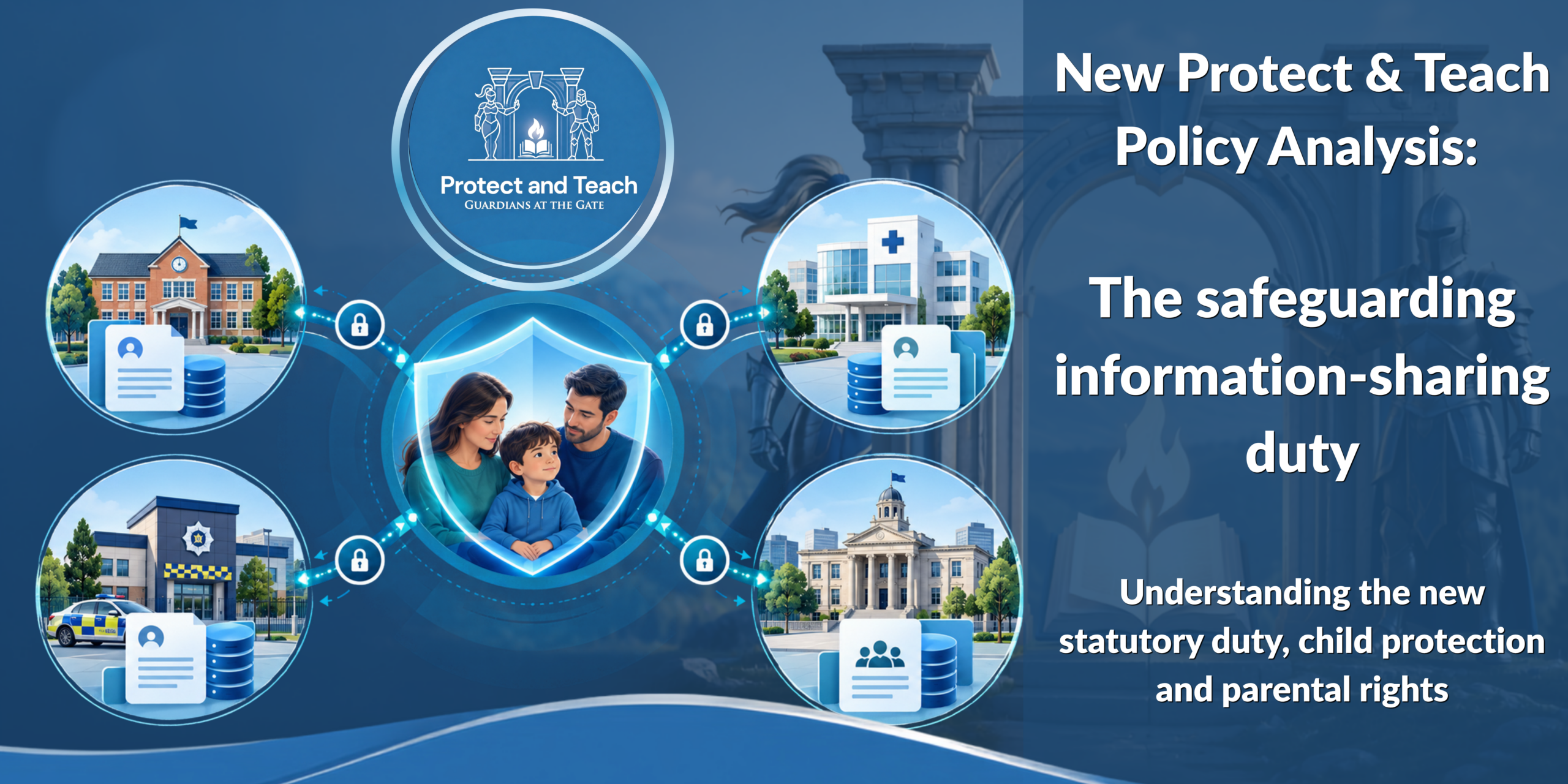
From 30 September 2026, a new statutory information-sharing duty comes into force in England under section 16LA of the Children Act 2004, inserted by the Children’s Wellbeing and Schools Act 2026. The Department for Education’s final statutory guidance was updated on 10 September 2026 to reflect that new duty.
The purpose is clear: important safeguarding information should not remain fragmented across schools, health services, police, local authorities and other agencies where bringing those pieces together could help protect or support a child.
But the new duty is broader than traditional child-protection intervention. It can operate before the significant-harm threshold is reached and extends into safeguarding, promoting welfare, early help and emerging need. It also creates a positive duty to disclose relevant information in defined circumstances rather than simply confirming that professionals may lawfully share it. GOV.UK
That makes the practical safeguards around accuracy, relevance, proportionality, professional judgment, privacy, data security and correction especially important.
Protect & Teach has therefore published two new resources.
Full Policy Analysis
The new safeguarding information-sharing duty: understanding the new statutory duty, child protection and parental rights
Our full analysis examines:
- what has changed in law;
- who is covered by the new duty;
- why Government says the change is necessary;
- the difference between significant harm and the broader concept of promoting welfare;
- what parents can and cannot refuse;
- the position of voluntary Family Help;
- malicious, unfounded and disputed allegations;
- the difference between fact, allegation and professional opinion;
- information about parents and other adults;
- rectification when inaccurate information has already been shared;
- interoperability between different agency systems;
- retention, security and data breaches;
- Article 8 privacy and family-life considerations;
- and the practical safeguards families and professionals can use.
The analysis does not argue against necessary safeguarding information-sharing. Effective multi-agency communication can be crucial where different organisations each hold only part of the picture.
But increased sharing also increases the importance of preserving source, context and evidential status.
An allegation does not become corroborated simply because it has been copied into several systems. A professional opinion should not silently become fact. And a family declining a voluntary service should not automatically be characterised as unwilling to safeguard their child.
Our central conclusion is simple:
Good safeguarding is not maximum secrecy or maximum sharing. It is the right information, shared with the right person, for a clear safeguarding or welfare purpose, at the right time, with its source, context and evidential status preserved.
[Download the full Policy Analysis or View Online]
Short guide for parents and professionals
We have also produced a much shorter visual guide for readers who want the main points without reading the full analysis.
What the new safeguarding information-sharing duty means: a short guide for parents and professionals
The guide explains:
- what changed on 30 September 2026;
- when information may be shared;
- whether parents can refuse;
- the difference between information-sharing and accepting voluntary help;
- what happens if information is wrong;
- why fact, allegation and professional opinion must remain distinct;
- and the questions parents and professionals should ask.
[Download the short guide or View Online]
Why this matters
The new statutory guidance applies across a wide safeguarding network including local authorities, integrated care boards, NHS trusts, police, education, early years, probation, youth justice and primary care. DfE says the aim is more consistent implementation and earlier, better information-sharing between services.
That objective is important.
But the effectiveness of the reform will ultimately depend not only on whether information is shared, but on what is shared, why it is shared, how accurately it is recorded, who receives it, how long it is retained and whether mistakes can be corrected wherever they have travelled.
Protect & Teach will continue to monitor implementation of the new duty as practice develops.
Live implementation tracker
The new information-sharing duty came into force on 30 September 2026. Protect & Teach will continue to monitor how the duty is implemented in practice, including changes to DfE and ICO guidance, local protocols, information standards, complaints, enforcement, relevant case law and evidence of unintended consequences or safeguarding benefits.
Particular attention will be paid to: how agencies interpret “promoting welfare”; whether voluntary Family Help remains genuinely voluntary in practice; how inaccurate or disputed information is corrected across multiple systems; and whether increased information-sharing is matched by strong data-quality, transparency and security safeguards.