
Published: 4 November 2026
Category: Media Coverage | Publications
Publication: The Telegraph
Journalist: Janet Murray
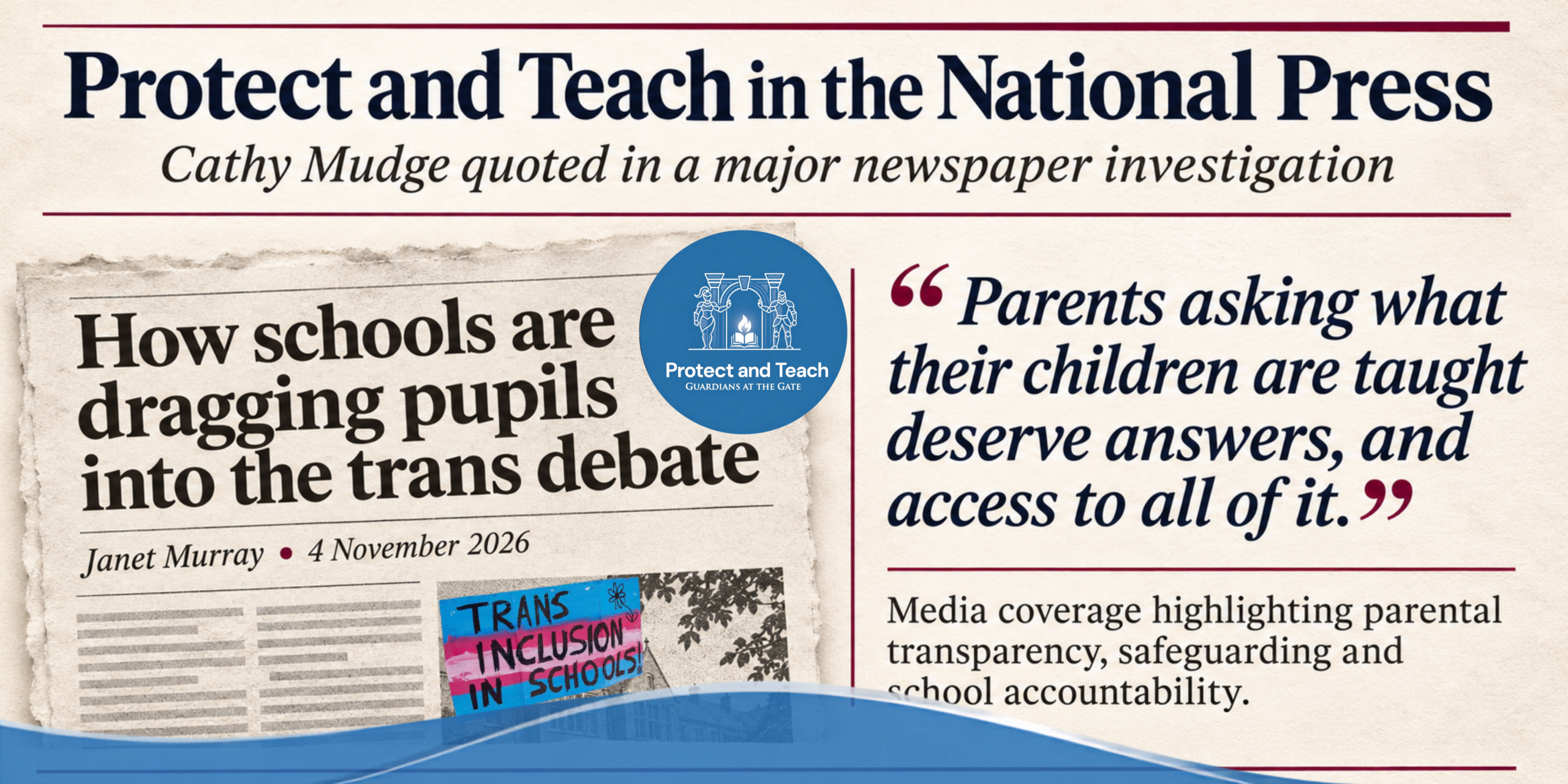
Protect and Teach CIC has been featured in a national investigation by journalist Janet Murray, published in The Telegraph on 4 November 2026.
The article, “How schools are dragging pupils into the trans debate”, examines concerns raised by parents about gender identity in schools, the expectations placed on children, the activities of lunchtime LGBT clubs and the difficulties some families report when seeking information or questioning school policies.

Cathy Mudge, Director of Protect and Teach CIC, contributed to the investigation, drawing attention to reports received from families who believe their concerns about safeguarding, privacy and freedom of belief have not always been adequately addressed.
Parents deserve transparency, not dismissal
Speaking to The Telegraph, Cathy described how some families felt their questions were being treated:
“as prejudice rather than properly examined as possible safeguarding, privacy or belief issues”.
The article also quotes Cathy on parents’ difficulties obtaining information about school teaching and extracurricular clubs:
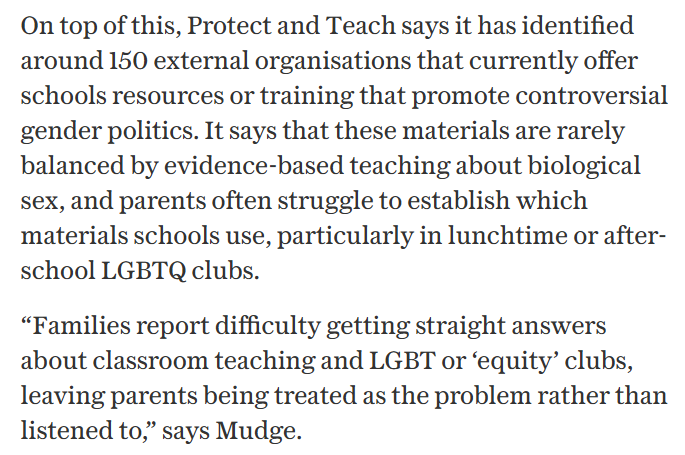
“Families report difficulty getting straight answers about classroom teaching and LGBT or ‘equity’ clubs”.
These concerns go to the heart of Protect and Teach’s work.
Parents should be able to establish what their children are being taught, which external organisations are involved, what resources are being used and how schools ensure that safeguarding responsibilities are met.
Asking questions about school policies or educational materials should not, in itself, be treated as evidence of prejudice.
External organisations and educational resources
The Telegraph also reports Protect and Teach’s identification of approximately 150 external organisations offering schools resources or training involving contested approaches to sex and gender identity.
This is an area of continuing research for our organisation.
Our concerns include the transparency of external provision, the evidence underpinning educational materials, the distinction between established facts and contested beliefs, and the ability of parents to scrutinise activities taking place during both the formal school day and extracurricular sessions.
Schools remain responsible for safeguarding pupils and ensuring that the content and activities they provide are appropriate, including where external organisations or individuals are involved.
We believe parents should be able to obtain clear information about resources, visiting providers and school-organised clubs without having to navigate unnecessary barriers.
What did Janet Murray’s investigation find?
The investigation brings together accounts from families who reported uncertainty or disagreements about how schools approach teachers’ preferred titles and pronouns, gender identity, and the activities of LGBT clubs.
All the families interviewed requested anonymity because they feared repercussions for their children.
The reporting also includes responses from schools, other professionals and the Department for Education. In one case, a school trust disputed having received a parental letter and stated that its lunchtime club was a voluntary social group, with no specific teaching materials used.
These are important distinctions. Individual concerns must be examined fairly, and allegations should not automatically be treated as established findings.
Nevertheless, the accounts raise legitimate questions about transparency, parental involvement, safeguarding oversight and how schools respond to disagreements involving protected beliefs.
Safeguarding and parental involvement must come first
Protect and Teach believes schools must be able to protect children, respect the rights of others and maintain appropriate professional boundaries without requiring pupils or families to adopt a particular position on contested matters.
Our work continues to focus on:
- Child safeguarding: ensuring children’s welfare and best interests remain central to school decisions.
- Parental transparency: enabling families to understand what is being taught and which organisations are involved.
- Evidence-informed education: distinguishing biological facts, legal duties, personal beliefs and contested claims.
- Professional accountability: ensuring safeguarding concerns and complaints are considered properly and fairly.
- Political impartiality: maintaining appropriate boundaries between education and advocacy.
These principles should apply to lessons, assemblies, clubs, external providers and other school-organised activities.
Thank you to Janet Murray
We thank Janet Murray for investigating these concerns, speaking directly to families and giving space to the questions they are raising.
We also recognise the parents who shared their experiences, including those who requested anonymity.
Protect and Teach CIC will continue examining the evidence, school policies, external resources and concerns brought to our attention.
Children’s safeguarding matters. Parental involvement matters. Transparency matters.
Read the full investigation
Janet Murray — The Telegraph, 4 November 2026
How schools are dragging pupils into the trans debate https://www.telegraph.co.uk/news/2026/11/04/how-schools-dragging-pupils-trans-debate/
Related Protect and Teach coverage:
Protect and Teach featured in the Daily Mail — 19 July 2026